
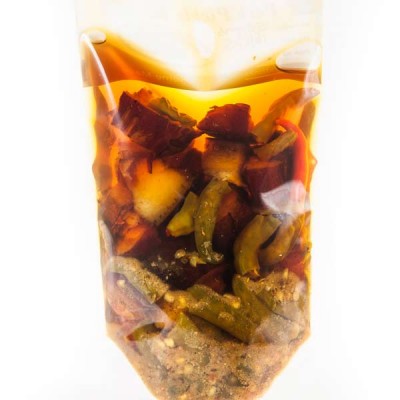
Most people in India grow up with achaar. Mango pickle. Lime pickle. Mixed vegetable pickle. Oil-heavy, spiced with mustard and fenugreek, tangy and sharp. It is one of the great constants of Indian food — present in virtually every regional cuisine, every household, every thali.
Northeast Indian pickles exist in a completely different universe.Here's what makes them different — and why, once you've tried them, regular achaar starts to feel like only part of the story.
The Base Ingredients: Northeast Indian Pickles Northeast pickles use the full range — vegetables, fruits, and significantly, meats and fish. Pork pickle, chicken pickle, dry fish pickle, axone (fermented soybean) pickle — these have no real equivalent in mainstream Indian pickle tradition. The ingredient diversity is far wider.
The Preservation Method - Northeast preservation methods are more diverse and often more ancient. Fermentation — of soybeans, bamboo shoot, fish — creates complex flavours through microbial processes. Smoking — of pork, of fish — adds preservation and flavour simultaneously. The results are fundamentally different in flavour profile from anything achieved through oil and salt alone.
The Flavour Profile - The flavour palette is broader and harder to categorise with northeast Indian pickles. Fermented pickles like axone are deeply umami — savoury in a way that more closely resembles Japanese miso or Korean doenjang than any Indian pickle. Smoked and dry fish pickles have a depth and intensity that is entirely their own. Chilli pickles like king chilli and dalle khursani deliver heat with fruity, floral notes beneath it.
The Role in a Meal - In many Northeast communities, pickle is not a condiment — it is a core part of the meal. A bowl of rice with axone pickle or pork pickle is a complete, satisfying meal in itself. The pickle does the work that a curry or sabzi might do elsewhere in India.The Heat LevelRegular Indian Achaar Ranges from mild to moderately spicy depending on the recipe and region.Northeast Indian Pickles Can range from mild (tree tomato pickle, mulberry preserve) to some of the hottest food experiences available anywhere in India. King chilli pickle and dalle khursani pickle are made from chillies that rank among the hottest in the world. This is not decorative heat — it is the point.
Which Should You Try First?
If you're new to Northeast Indian pickles, start here:
Bamboo shoot pickle — tangy, earthy, familiar enough to ease you in
Chicken pickle — rich and spiced, closest in texture to pickles you might already know
Tree tomato pickle — unusual, slightly sweet, a great conversation starter Once you're ready to go deeper:
Axone pickle — the most distinctive flavour in Northeast food Pork pickle — rich, smoky, deeply satisfying
King chilli pickle — super spicy so, get it only if you mean it.
Explore our full range at thenortheaststore.com — authentic Northeast Indian pickles sourced directly from producers across Meghalaya, Nagaland and Assam, delivered fresh across India.